Early Childhood/Childhood Education
Build a foundation for a rewarding career.
- Degree
- Associate of Arts
- Program Type
-
Transfer Degree
- Pathway
- Social Science
- Credits
- 64
Shape young minds
SUNY Adirondack's degree in Early Childhood/Childhood Education has a wide range of teacher-education discipline options to support aspiring educators.
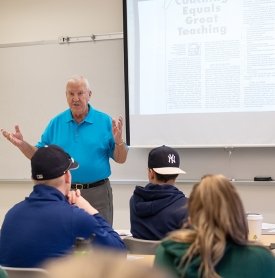
Educational options
SUNY Adirondack's Early Childhood/Childhood Education degree prepares students for further education. We hold more than 30 seamless transfer agreements. Popular transfer institutions include: SUNY Plattsburgh | SUNY Oswego | University at Albany
Careers in Early Childhood/Childhood Education
SUNY ADK advantage
$116k
average salary
of a special education preschool school teacher in New York state
$49k
average salary
of preschool teachers in New York state
$64k
average salary
of an elementary school teacher in New York state
Learning outcomes
- Employ written and verbal communication skills, including the appropriate use of technology.
- Evaluate the impact of how the sociological and philosophical foundations of education influence the American education system.
- Demonstrate a broad base of liberal arts knowledge that would be needed to provide instructional services in a school setting.
- Identify psychological theories and their applications to working with children in an educational environment.
- Articulate a personal philosophy of education aligned with the role of an early childhood/childhood educator, and demonstrate a commitment to diversity, equity and inclusion in educational settings.
- Demonstrate an understanding of the scientific method.